By Wajiha Akhtar, PhD, MPH; Salma Abadin, MPH; Alan Talaga, MPH; Soraya Willems-Neal; Ashley Voss; Annie Rosemurgy, PHD; Cassie Sesto, MPH, University of Wisconsin Population Health Institute
What happens when you give local health departments a platform to share their “Eureka!” moments? You get a thriving peer-learning community that transcends jurisdictional lines.
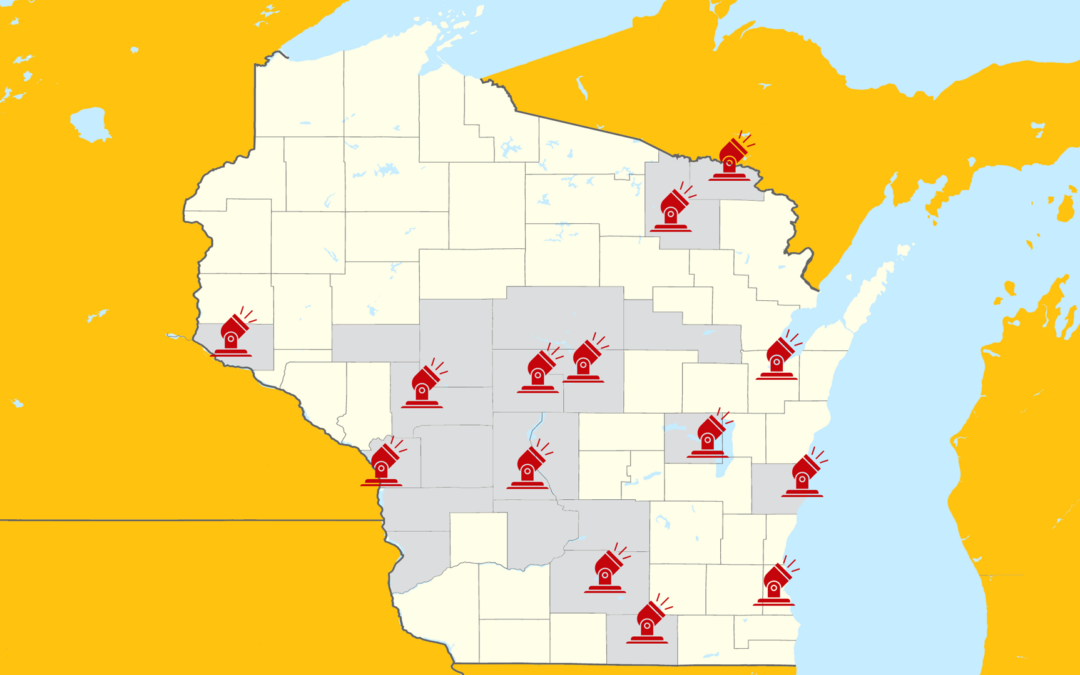
At the University of Wisconsin Population Health Institute (UWPHI), we recognize that the strongest public health infrastructure isn’t built from the top down; it’s built from the ground up. As part of our work with the Division of Public Health at the Wisconsin Department of Health Services under the Wisconsin Public Health Infrastructure Grant (PHIG), we’ve created the monthly PHIG Spotlight series to center the expertise already living within our communities. Each month, we invite a local or Tribal health department to share innovative practices or tell us how they addressed a problem in their community.
The PHIG Spotlight series complements our other PHIG programming, including our Wisconsin Discusses series, which features presentations from a state or national speaker followed by conversations that foster Wisconsin-centered dialogue around high-interest public health topics, and our tailored local and Tribal health department Training and Technical Assistance offerings. The primary audience of all of our PHIG programming are Wisconsin’s local and Tribal health departments.
The Power of the “Spotlight”
Our monthly PHIG Spotlight series was born from a simple premise: local and Tribal health departments are the primary architects of public health innovation. Every spotlight features a different local or Tribal health department showing us how they are navigating and implementing the Foundational Public Health Services (FPHS) framework, specifically the eight Foundational Capabilities. PHIG Spotlights provide a space for Wisconsin public health departments to share their experiences, lessons learned, and barriers encountered while implementing programs or policies. Departments are asked to prepare a 20 to 30-minute presentation followed by a Q&A facilitated by UWPHI. Presentations are designed to foster shared learning, collaboration, and innovation across agencies.
Whether it’s an innovative collaboration between environmental sanitarians and social workers to allow for a person-centered approach for resolving housing complaints or clever ways for small health departments to create a strong community health assessment and improvement plan, PHIG Spotlights provide a “behind-the-scenes” look at the work. The series moves from awareness of the Foundational Capabilities to understanding of how local leaders are taking action.
“The UW Population Health Team provided technical support for our presentation. They were easy to work with and I would recommend other Local and Tribal Health Departments share their work using the PHIG Spotlight to strengthen public health infrastructure.” – Annette Seibold, Director / Health Officer, Florence County Health Department
Why Peer-to-Peer Matters
Our registration numbers and participant evaluations show that this series is one of our most valued offerings. But why?
- Authenticity: There is a unique credibility that comes from hearing a peer describe a challenge they actually faced and how they overcame it.
- Scalability: Seeing a case example from a neighbor makes operationalizing the FPHS feel achievable rather than abstract.
- Connection: Public health work can often feel isolating. This series reminds practitioners that they are part of a larger, supportive network across Wisconsin.
“The PHIG Spotlights provide an opportunity to hear directly from other local health professionals who are directly involved in PHIG related projects. It is refreshing and useful to hear what’s worked, what hasn’t and have an opportunity to ask questions, share resources, and learn from each other.” – Julia Salomón, Administration Supervisor, Winnebago County Public Health
Strengthening Wisconsin’s Public Health Infrastructure
By centering the experiences of local and Tribal health departments, we are doing more than just sharing success stories; we are building a more resilient infrastructure. When one department strengthens its Foundational Capabilities and shares that roadmap with others, the entire state grows stronger.
As we continue the PHIG Spotlight series, UWPHI remains committed to creating the conditions and platforms for public health practitioners to innovate, reflect, and lead together.
To learn more, check out these resources:
- UWPHI Wisconsin’s Public Health Infrastructure Grant (PHIG)
- Sign up for the UWPHI Learning Digest newsletter to stay informed of upcoming PHIG Spotlights