By Shandy Dearth, MPH, Indiana University Fairbanks School of Public Health
Value of Academic Health Department Partnerships
As we all strive to make connections, use resources as effectively and efficiently as possible, and serve the most vulnerable communities, you may consider looking into forming an Academic Health Department (AHD) partnership if you haven’t already done so. These partnerships are a simple formal affiliation between a health department (state, local, or Tribal) and a university/college. This relationship can be described as the public health equivalent of the “teaching hospital” affiliation found between hospitals and medical schools, and a list of such active partnerships can be seen on the Public Health Foundation’s website.
At my own school, even though we have always worked closely with our state and local health departments, entering into this formal agreement with the local health department based in the city where we are located has strengthened connections in ways that far exceed the possibilities we imagined. The university has benefited from having more readily accessible public health practitioners who can offer guest lectures, provide job shadowing opportunities to students, and serve as internship preceptors. Faculty members are connected with those who can best give input on how to implement a research project with a community, not just in a community. Our diverse student body speaks a variety of languages, and many of our students have been able to offer translation services at community-facing events organized by the health department.
This saves scarce health department translation dollars, and the students gain valuable real-world experience as they pursue their degrees. In addition to this student-focused work, both agencies have approached each other to partner in grant applications, journal submissions, and conference presentations.
Facilitating Collaborative Opportunities
Most recently, the AHD partnership resulted in a contract for the two agencies to share a position that is integrated into both agencies. Having this one constant and consistent point of contact for both agencies to approach to create connections with new partners and subject matter experts has elevated the strength of the collaboration. For example, universities have access to many online academic journal libraries and databases, which are essential for research, providing access to peer-reviewed articles, e-books, and primary sources. Most health departments do not have access to these resources due to budgetary constraints. Our university allows us to pilot a program where we are granting affiliate access to program managers in the health department so they can access the latest evidence-based research on maternal and child health issues for their work.
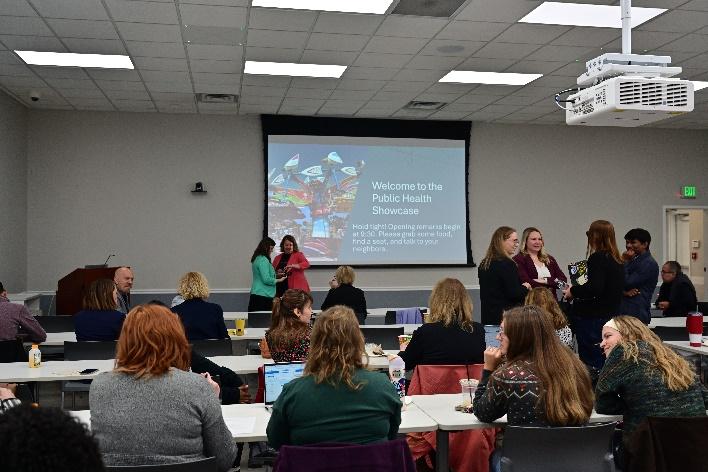
Once a year, both agencies meet for a ‘public health showcase’ where partners from each agency co-present to share findings from their latest projects. Faculty from the university and staff from the health department are invited. Hearing firsthand how the agencies work together and what resources (such as data and expertise) each side has to offer helps to generate ideas for future work. Being together in the same space has facilitated conversations and introductions in ways virtual meetings simply cannot. We are already planning our next showcase and are excited to hear about the latest outcomes from these constantly evolving connections.
Starting Your Own AHD Partnership
There are no set requirements to develop an AHD. There is an active AHD learning community openly sharing lessons learned to help you grow your own network. If your university or health department is already working with a partner, reach out to that agency to inquire if anyone is interested in championing a more formal agreement. Inviting them to review the learning community can spark interest and prompt those first steps. If you do decide to move forward with a formal agreement, you can post your AHD on the AHD page supported by the Public Health Foundation. This link can be shared when introducing the concept to new partners and to offer documentation of your ongoing relationships with public health agencies on grant applications. The supports are in place to help you and your community grow your public health networks.
To learn more, check out this resource: